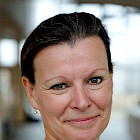

Interview with Theresa Prietz, Alpine Eagle GmbH
New Defence: working in a highly dynamic environment
Ukraine has shown that defense and warfare are changing massively. Drones and autonomous systems play an important role. In response, a “boom” in new company foundations set in in the defense sector after 2022. One of these start-ups is Alpine Eagle. The Munich-based company was founded in 2023 and developed the airborne counter-drone system Sentinel. Alpine Eagle employs around 50 highly specialized professionals in the fields of aviation, robotics and autonomous systems. Specialists who are also in demand in other industries. Theresa Prietz, Head of People & Talent Acquisition, talks about the special features of the job, what she pays particular attention to in applicants, and what she advises specialists interested in entering the defense sector.

“Anyone who enjoys sophisticated technology, a dynamic environment and a clear mission can achieve a great deal here.”
DEKRA: How many employees do you currently have, and how many do you plan to hire in 2026?
Prietz: In June, our number of employees will rise to 53. We plan to grow to more than 80 employees by the end of 2026.
DEKRA: For which areas of the company are you looking for new staff?
Prietz: The heart of our company is our system solution, and thus above all the people who develop, test and advance it. Accordingly, there is a particular focus on engineers and technical staff in development and testing. At the same time, all the other functions around them are growing too: finance, HR, sales/business development, communications and other areas form the foundation of the organization and the scalable processes that will sustain our growth in the long term.
DEKRA: Which fields of study and qualifications do you look for most often?
Prietz: That varies greatly depending on the position. Particularly sought after are profiles with academic or practical experience in the fields of unmanned aviation, robotics and autonomous systems. A background in the defense sector also brings valuable input.
At the same time, this is not a requirement for all roles: we repeatedly have open positions in which career changers with other qualifications and experience can also be a very good fit.
DEKRA: Which qualities do you value most in applicants?
Prietz: It is important to us that people enjoy moving things forward and implementing them. In a defense tech start-up, you need a high degree of initiative and the willingness to take on responsibility. Also, or above all, when not everything is yet specified down to the last detail.
Just as important are curiosity, team spirit and the ability to learn quickly. We are looking for people who are technically strong but can also cope well with priorities changing quickly in a dynamic environment.
DEKRA: Do you find enough specialists with the profiles you need?
Prietz: The profiles we are looking for are very much in demand on the market, especially at the interface of hardware, software, robotics, aviation and autonomous systems. Recruiting is therefore not a sure-fire success for us, and we devote ourselves to hiring new employees with a focus on quality. At the same time, we notice that many candidates are specifically looking for technologically demanding tasks and want to identify with our mission. That is exactly where we can score.
DEKRA: Can you deploy specialists from other industries directly?
Prietz: For many areas, we can use experience from outside the industry very well and directly. What matters most are the relevant skills, the willingness to learn and the will to quickly get to grips with a dynamic environment.
DEKRA: How do you impart missing knowledge and competencies?
Prietz: When hiring, we naturally pay attention to the best possible professional and personal fit for the respective role. After that, we support development in a very structured way: in probationary and annual reviews, we compare the requirements of the position with the existing competencies.
If development areas or new needs emerge, we jointly draw up an individual development plan, for example through targeted training, mentoring or learning on the job.
DEKRA: What importance does qualification have at Alpine Eagle in general?
Prietz: Qualification is very important to us because we work in a technologically demanding and fast-growing environment. We give employees plenty of room to develop professionally and personally and to take on responsibility if they wish. This happens in everyday work through challenging projects, targeted responsibilities, on-the-job training, mentoring and targeted development measures. What matters to us is a culture in which learning, knowledge sharing and further development are taken for granted.
“In technical terms, the daily work often differs less than many think: good product development, clean processes, teamwork and technological excellence are just as decisive here as in other innovative industries.”
DEKRA: Does working in the defense sector differ greatly from other industries?
Prietz: Yes, in some respects it does. The defense sector is more heavily regulated and carries a particular responsibility, both with regard to security and compliance and with regard to the purpose of the technology and the user’s problems that you are confronted with. At the same time, in technical terms the daily work often differs less than many think: good product development, clean processes, teamwork and technological excellence are just as decisive here as in other innovative industries.
DEKRA: Are there adjustment difficulties among employees from other industries?
Prietz: In principle, we do not experience this as a major hurdle. Of course there are topics that you have to familiarize yourself with, such as regulatory requirements, security processes or industry-specific procedures. But we do not leave new colleagues to their own devices: we have a structured onboarding and experienced employees from the defense sector who share their knowledge and provide support at the start.
DEKRA: What do you advise specialists who are interested in a career in your industry?
Prietz: Don’t be put off if your own CV doesn’t look like a classic defense tech profile. Many skills from other industries are highly transferable. Above all, it is important to consciously engage with the industry and the responsibility behind it. Anyone who enjoys sophisticated technology, a dynamic environment and a clear mission can achieve a great deal here.
DEKRA: What are the biggest challenges in recruiting for the defense sector?
Prietz: One of the biggest challenges is to build teams with knowledge that is as diverse as possible and with different perspectives. The defense sector requires expertise from many areas: technical know-how, experience in development and testing, an understanding of government structures and, ideally, the perspective of the users as well.
At the same time, experience from other environments is also valuable, for example from large corporations with strong processes or from very dynamic innovation areas. Our goal is to bring these different backgrounds together, combine the best ideas and create a culture in which knowledge is actively shared and passed on.
DEKRA: What do you want from policymakers with regard to the labor market?
Prietz: For the German labor market, I would like to see more openness and permeability between industry, research, start-ups, investors and public institutions. Especially in future industries and deep-tech fields, innovations arise where different perspectives and competencies come together. This requires more spaces and formats that promote exchange and collaboration instead of thinking in silos. Cooperation and competition should not be mutually exclusive but should strengthen each other.
Back